


 Author:
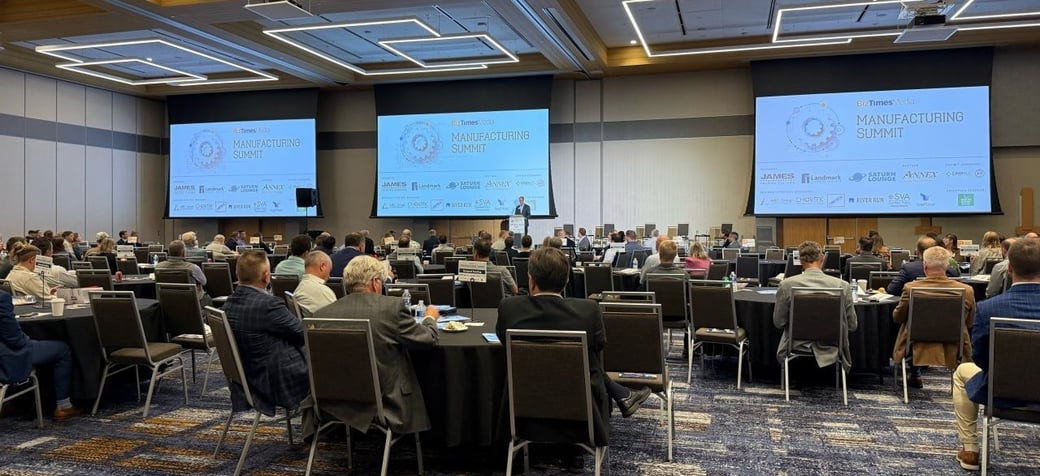
The 2026 BizTimes Manufacturing Summit brought together manufacturing leaders and industry experts to discuss the technologies, workforce challenges, and evolving business strategies shaping the future of the industry.
Throughout the event, several important themes kept coming up, including the growing role of artificial intelligence (AI) in manufacturing operations, how AI is changing the way buyers research suppliers, and the importance of attracting the next generation of manufacturing talent.
Missed the event? No worries! We're breaking down three of our biggest takeaways from this year's Manufacturing Summit and what they mean for manufacturers moving forward.
1. Implementing AI in Manufacturing: Start Small, Think Strategically
AI continues to create new opportunities for manufacturers to improve efficiency, streamline operations, and make more informed business decisions.
However, one of the biggest messages from the summit was clear: successful AI implementation starts with identifying a business need, not simply adopting new AI technology to keep up with competitors.
Importance of Building a Strong Foundation for AI Implementation
Before implementing AI or automation, manufacturers should evaluate their existing workflows and identify where AI can have the greatest impact. Having accurate, organized, and accessible data is equally important. Without a strong data foundation, even the most advanced AI tools may struggle to produce reliable results.
Rather than rushing into implementation, manufacturers should consider several important steps:
-
Identify opportunities: Evaluate current processes to determine where AI can improve productivity, reduce repetitive tasks, or support better decision-making. Do not just implement AI for the sake of implementing AI.
-
Prepare your data: Ensure information is accurate, organized, and accessible before integrating it with AI tools. Taking the time to get your data right from the start can help prevent inaccurate outputs and rework down the road, which will result in lost time, resources, and money.
-
Establish guidelines: Develop clear policies around AI usage, data security, employee access, and oversight.
-
Start small: Begin with AI pilot programs to test effectiveness, measure results, and identify potential challenges before expanding. Focus on long-term business value rather than expecting an immediate return on investment.
-
Measure results: Establish clear goals and performance benchmarks to determine whether AI is delivering meaningful value.
By mapping processes and identifying repetitive, time-consuming tasks, companies can better understand where AI can improve productivity and reduce inefficiencies.
Looking for ways AI can improve your marketing and sales workflows? Check out our blog, 40 AI Tools for Your Marketing Tech Stack.
Don't Overlook AI Security Risks
Beyond implementation, manufacturers also need to consider the potential cybersecurity risks associated with AI adoption. One concern mentioned during the summit was shadow AI, which occurs when employees use AI tools or applications without their organization's knowledge or approval. This can create security vulnerabilities, particularly when sensitive company information, customer data, or proprietary processes are shared with unapproved platforms.
Establishing clear AI policies, educating employees on approved tools, and maintaining proper security controls can help manufacturers reduce these risks while encouraging responsible AI adoption.
The key takeaway? Manufacturers don't need to implement AI everywhere at once. A thoughtful, phased approach can help organizations explore new opportunities while managing costs, security risks, and operational challenges. Starting slow, with intent and purpose, will get you a lot better results than diving in the deep end.
2. AI Is Changing How Buyers Find and Evaluate Manufacturers
AI's ability to streamline manufacturing processes was just one part of the conversation. Another major focus of the summit was how AI and large language models (LLMs) are changing the way buyers discover, research, and ultimately select manufacturing partners.
In the past, buyers might have visited a manufacturer's website, reviewed its capabilities, and contacted a sales representative to learn more. Today, many buyers are turning to AI tools like ChatGPT, Claude, and Gemini to research potential suppliers, compare capabilities, and gather information before ever visiting a company's website.
As a result of AI search, buyers are entering the sales process more informed and further along in their decision-making journey.
For manufacturers, this shift creates an opportunity to rethink how their company, products, and expertise are represented and marketed online.
Check out our blog on loop marketing for manufacturers to see how today's buyers require a strategy that extends beyond traditional website visits.
Moving Beyond Traditional SEO to AI Search Optimization
While traditional search engine optimization (SEO) remains important, manufacturers also need to consider how AI tools find, interpret, and reference information about their businesses.
This is where Answer Engine Optimization (AEO) and Generative Engine Optimization (GEO) come into play. These approaches focus on making content easier for AI-powered search engines and LLMs to understand, retrieve, and potentially reference when responding to user questions.
So, what can manufacturers do to improve their visibility in AI-generated search results, including Google's AI Overviews and responses from tools like ChatGPT?
-
Answer customer questions directly: Create content that addresses the specific questions buyers are asking, rather than focusing solely on broad industry keywords.
-
Develop detailed, helpful content: Publish technical articles, FAQs, case studies, and other resources that demonstrate your company's expertise.
-
Maintain a consistent digital presence: Keep company information, product names, and messaging accurate across your website, social media, industry directories, and other digital platforms.
-
Leverage subject matter experts: Work with engineers, sales representatives, and other internal experts to develop original content that reflects real-world knowledge and experience. Consider publishing LinkedIn thought leadership articles to share their insights, demonstrate expertise, and build credibility with potential buyers.
-
Highlight what makes your business different: Go beyond generic claims about quality and service by showcasing your unique capabilities, technical expertise, and real-world applications. Use specific examples, case studies, and product details to help potential buyers understand what sets your company apart.
-
Make content accessible: Present important information in readable website text and consider making valuable educational resources publicly available.
The key takeaway? Manufacturers need to create content that does more than attract website traffic through traditional SEO. By incorporating AEO strategies, manufacturers can improve their visibility in AI-powered search, establish credibility, and help potential buyers make informed decisions, regardless of where their research begins.
Looking for ways AI can improve your marketing workflows? Check out our blog, 40 AI Tools for Your Marketing Tech Stack.
3. Attracting the Next Generation of Manufacturing Talent Starts Now
While AI was one of the most prominent topics throughout the 2026 Manufacturing Summit, another important conversation kept coming up: the need to attract and develop the next generation of manufacturing talent.
As experienced employees approach retirement, manufacturers face the challenge of transferring institutional knowledge and attracting younger generations to fill these openings.
Building the next generation of manufacturing talent starts long before someone begins looking for their first full-time job. By partnering with local high schools, technical colleges, universities, and youth apprenticeship programs, manufacturers can introduce students to the wide range of career opportunities available in the industry.
Beyond attracting new talent, manufacturers should focus on showcasing the real-world impact of their work through their marketing incentives and strategies, which is increasingly important to upcoming generations.
While concerns about AI replacing jobs continue to grow, several Milwaukee-area manufacturing leaders emphasized a different approach: using AI and automation to improve existing jobs rather than replace them. By reducing repetitive tasks and streamlining workflows, these AI technologies can help employees work more efficiently and focus on higher-value responsibilities.
The key takeaway? Manufacturers that engage younger generations early, showcase meaningful career opportunities, communicate openly about how AI will impact employees, and invest in employee growth will be better positioned to build a strong workforce for the future.
Want to hear more from the industry experts? Visit the BizTimes YouTube channel to watch recordings of the 2026 Manufacturing Summit sessions.
Helping You Prepare for the Future of Manufacturing
If there was one overarching theme from the 2026 BizTimes Manufacturing Summit, it was that the future of manufacturing requires businesses to think strategically about both AI technology and people.
At Stream Creative, attending events like the BizTimes Manufacturing Summit helps us stay connected to the conversations shaping the industries and companies we serve.
By understanding these trends and challenges, we can continue helping our manufacturing clients develop digital marketing strategies that support their business goals today and prepare them for what's ahead. 💪
Looking to strengthen your manufacturing marketing strategy or discuss how AI is changing the way customers find your business? Contact our team to start the conversation.
